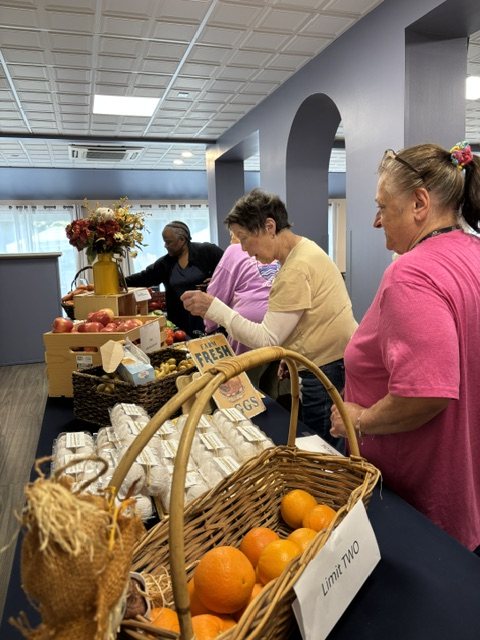
We run free farmers markets inside affordable housing communities — real produce, chosen by residents, at no cost and with no eligibility paperwork. Philanthropic support is what lets us open markets where they're needed most.
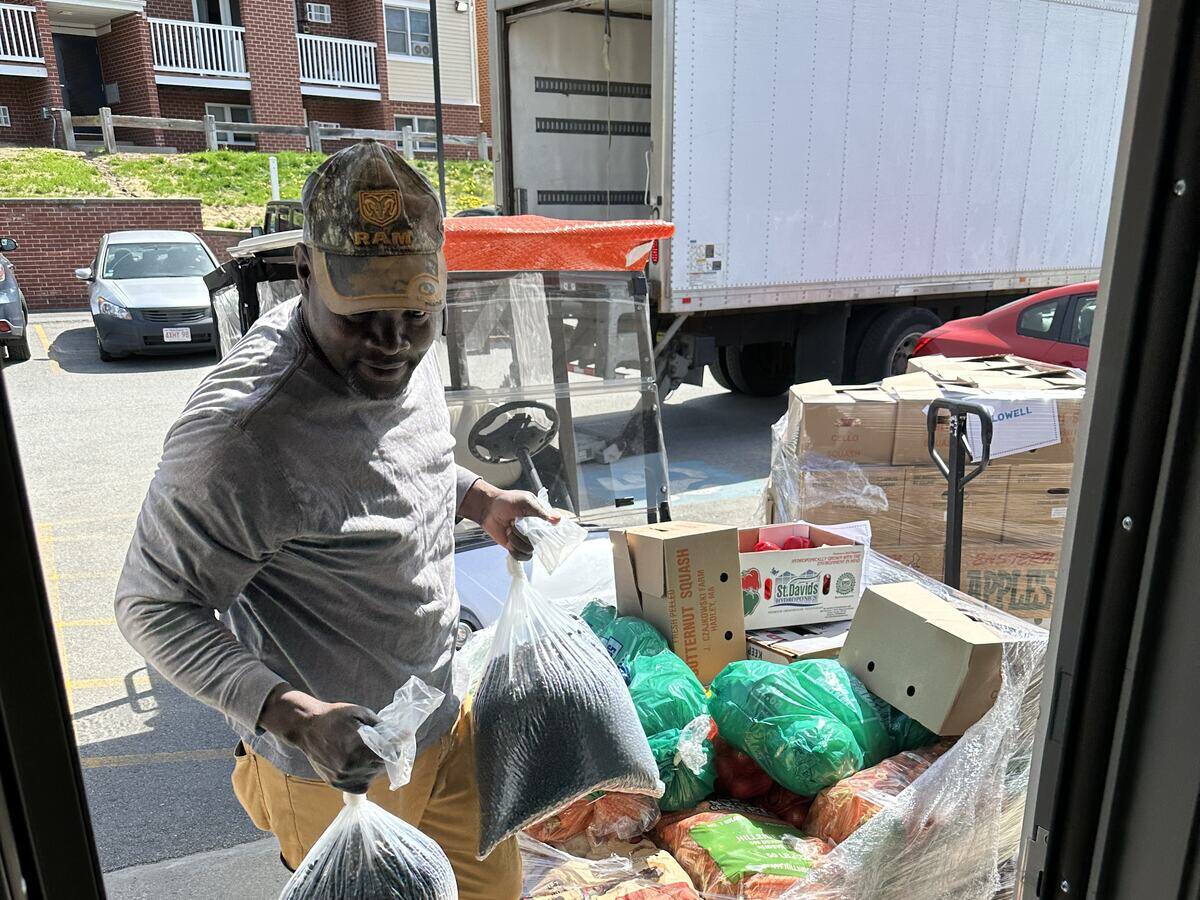
Most food assistance asks people to travel to it. Ours arrives at the property. Our drivers bring the food into the leasing office or community room and set it out on tables — and the property's own resident services team takes it from there.
Produce is bought direct from farms and wholesalers through a centralized network — no retail markup, no store overhead.
Our drivers bring the food to the leasing office or community room and lay it out on tables, ready to hand out. Nobody at the property sources food, manages vendors, or files reimbursements.
Each property's own resident services team gives the food to their residents. It's free, with no income screening and no sign-up. They already know their community; we handle everything upstream of the table.
Markets run on a predictable cadence so residents can plan around them and properties can budget for the year. Because we don't staff each site, the model scales from one property to hundreds.
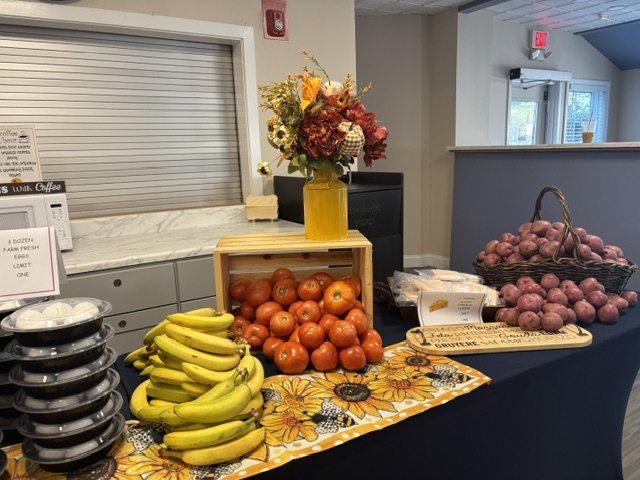
Our model is centralized sourcing plus regional delivery, which means a new market isn't limited by where we already operate. If a partner has properties in a state we've never served, we can build the supply chain for it.
Because we buy at wholesale and deliver direct, a dollar here puts a full pound of fresh produce into a resident's hands — sourcing, transport and delivery included.
One resident we serve remembers when fresh vegetables felt like a luxury she couldn't afford. Living on a fixed income, most of her budget went to rent and to medication for her diabetes. She relied heavily on canned and processed food from the pantry, which made managing her blood sugar steadily harder.
When Full Belly Foods began running markets at her community, she was among the first to come. Each month she now picks up crisp lettuce, ripe tomatoes, sweet peppers and seasonal fruit — food that has changed both her meals and her health, and that she tells our partners she looks forward to cooking again.
We're a small organization and we file like one. Here is the full picture, current as of our most recent completed fiscal year.
We're not running a capital campaign. Most of our program is funded by the housing operators we work with — but demand keeps outrunning what those budgets can carry. Every month we hear from communities whose residents need this and whose funding can't cover it.
Philanthropic support is what lets us say yes to them. A gift underwrites markets at properties that want the program and can't pay for it — and every site we open stays open.